Picture this: a child in your class has just had their "amygdala hijacked" over a playground dispute. They are completely dysregulated, panicking, or angry. What is our natural teacher instinct? We talk. We try to reason, explain, and instruct.
But cognitive science tells us that during a moment of acute emotional crisis, verbal processing shuts down. Complex verbal instructions can actually escalate the distress. This is exactly why the use of concrete, visual supports is so heavily endorsed for young children and those with communication needs.
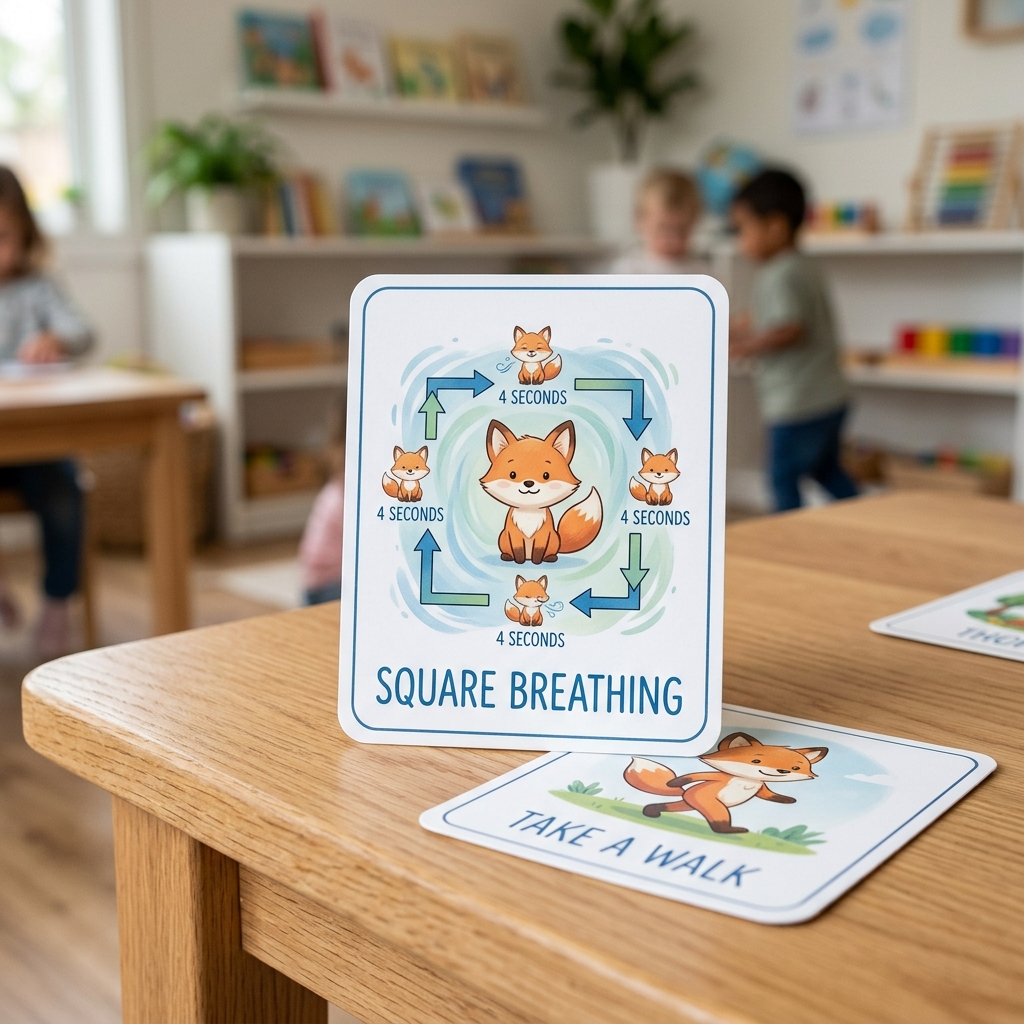
The Education Endowment Foundation (EEF) strongly recommends explicitly teaching Social and Emotional Learning (SEL) skills, including specific self-calming strategies. Tangible tools, like a physical card illustrating the 5-4-3-2-1 sensory grounding technique or a visual prompt for "square breathing" (inhale, hold, exhale, hold), bypass the overwhelmed auditory processing centres of the brain. They give the child an immediate, physical anchor in the present moment. Crucially, these tools foster autonomy, allowing children to eventually regulate themselves rather than relying solely on an adult to talk them down.
Question for your team: Do your pupils know how to calm down, and more importantly, do they have the physical visual tools in their hands to do it independently?