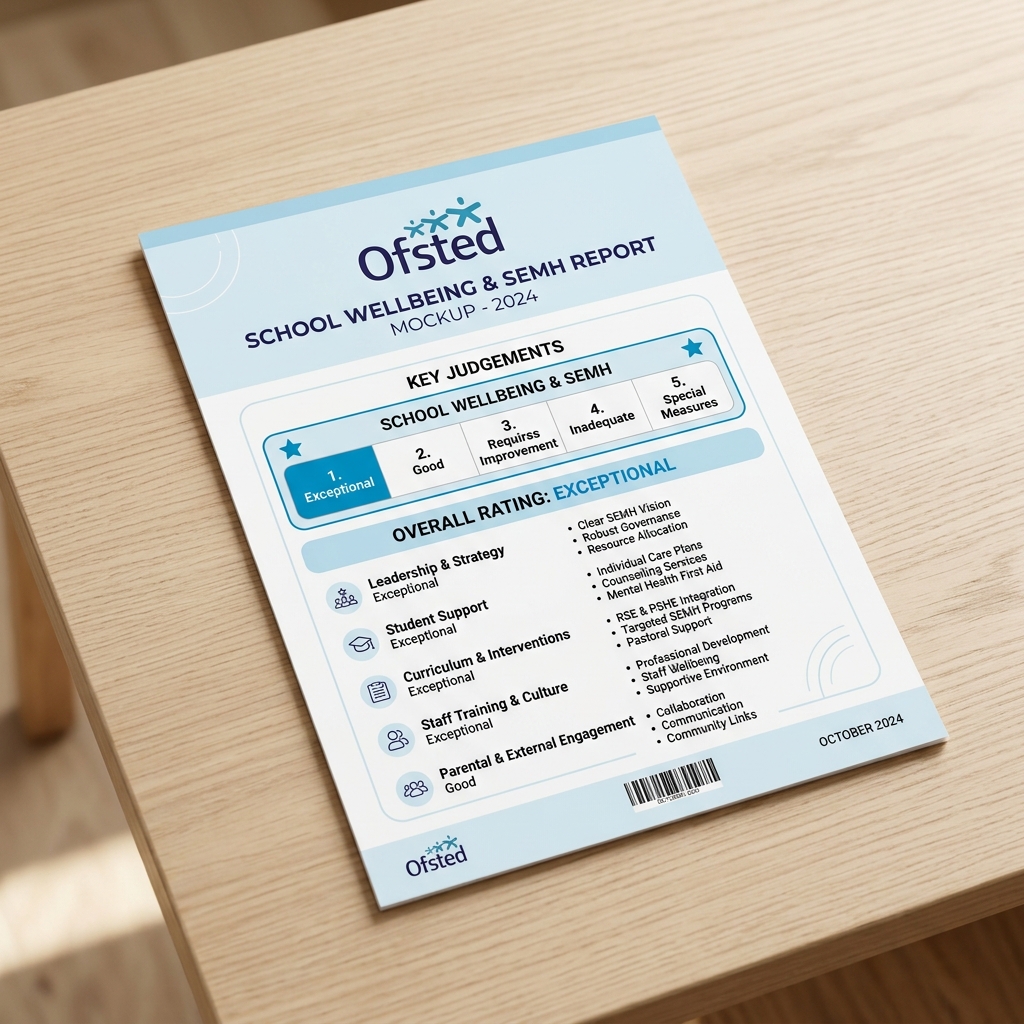
The educational landscape is shifting, and if you haven't caught up on the new 2025 Ofsted Education Inspection Framework, it’s time to take note. The headline news is the end of the dreaded single-word overall judgements. In its place, we now have a nuanced "Report Card" system featuring a five-point scale, ranging from 'Urgent improvement' up to the new gold standard: 'Exceptional'.
For those of us championing mental health, the real game-changer is the elevation of "Personal development and wellbeing" as a core, graded evaluation area. Inspectors aren't just looking for a PSHE policy tucked away in a binder anymore; they want to see exactly how we are actively teaching children the confidence, resilience, and knowledge to keep themselves mentally healthy.
To hit that "Strong" or "Exceptional" mark, schools must demonstrate a whole-school culture where emotional regulation is seamlessly woven into the day. This is where tangible coping strategies shine. If a child can independently grab a grounding card or practice square breathing during a stressful transition, that is living proof of exceptional personal development in action.
Question for your team: How visible and accessible are your emotional regulation tools when an inspector walks into a Year 4 classroom on a rainy Tuesday?